Why the LeStallion Writing Journal Notebook Belongs on Your Desk
A notebook that does more than hold ink
Most notebooks start with good intentions and end up half-used on a shelf. You buy one because you want to be organized, or creative, or just a little more together. But after a few days the pages stay blank because the notebook itself offers no help. It just sits there, waiting. That is where the LeStallion writing journal notebook changes the game in a quiet, practical way. It does not just give you lined paper. It gives you a structure that actually nudges you to write, plan, and reflect.
I have tested a lot of journals over the years. Leather-bound ones, spiral-bound ones, ones with prompts, ones with blank pages. The ones that worked best had one thing in common: they made the act of writing feel easier. The LeStallion writing journal notebook does exactly that, and it does it without gimmicks. The layout is thoughtful without being rigid. The paper is heavy enough to take fountain pen ink without bleeding through. And the cover is durable enough to throw in a bag and forget about.
How a physical journal still matters in a digital world
I used to keep everything in apps. Notes, to-do lists, project ideas, random thoughts. It worked okay until I realized I was never looking back at them. Scrolling through a list of notes feels like work. Flipping through a physical journal feels like discovery. There is a tactile difference. When you write by hand, you slow down. You think more carefully about what you are putting down. And when you leaf through pages later, you see patterns in your thinking that you would miss in a digital file.
The LeStallion writing journal notebook respects that difference. It is designed for people who want to be productive but also want to enjoy the process. The pages have a subtle layout that encourages you to date entries, jot down priorities, and leave room for reflection. It is not a planner, not a diary, but something in between that actually works for daily use.
What makes a journal useful day after day
I have found that the best journals are the ones you do not have to think about. You open them, you write, you close them. No decision fatigue about where to start or what format to use. The LeStallion writing journal notebook gets this right. The paper has a slight tooth that slows the pen just enough to keep your handwriting neat. The binding lies flat when open, so you can write comfortably near the spine. And the cover has a soft texture that makes you want to pick it up.
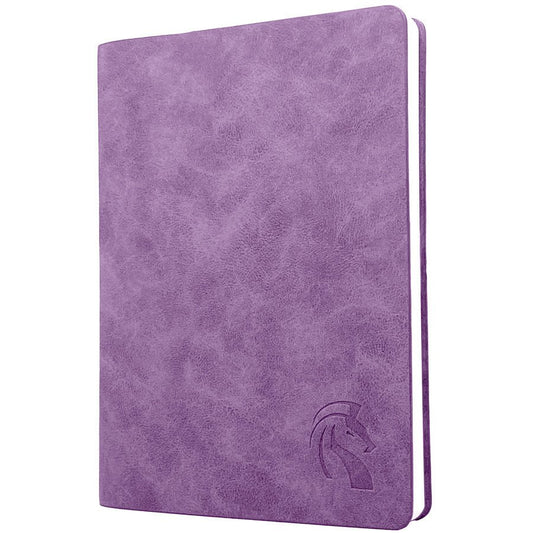
These details matter more than you would expect. A journal that is annoying to open or that forces you to hold it open with your other hand will get left behind. A journal that feels good in your hands becomes a habit. That is the difference between a notebook you use for a week and one you keep for years.
Practical ways to use a writing journal for productivity
I have settled into a few routines that make the most of a structured notebook like this one. These are not rules. They are just things that have worked for me and for people I have shared the journal with.
- Start each day with a single line about what you want to get done. Not a list, just one thing. Write it at the top of the page before checking your phone.
- Use the left page for notes and the right page for ideas. This gives you a natural split between capturing information and generating new thoughts.
- Leave a few lines at the end of each entry for a quick reflection. One sentence about what went well and one about what you would change.
- Review your entries once a week. Circle the ideas that still feel important. Cross out the ones that do not. This keeps the journal alive instead of becoming a graveyard of old thoughts.
- Carry it everywhere. The cover is sturdy enough to survive a bag. Having it with you means you actually use it when something comes to mind.
These small practices turn a blank notebook into a tool for thinking. The LeStallion writing journal notebook supports them without forcing them on you. That flexibility is rare.
Paper quality and writing experience
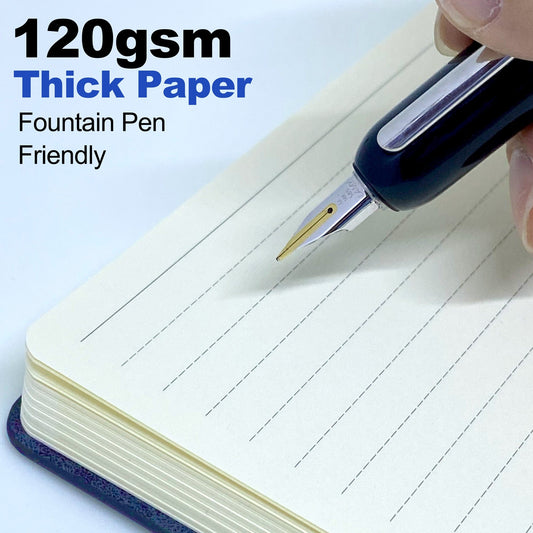
Let me be honest about paper. Not all paper is the same. Some is too thin and shows every ghost of ink from the other side. Some is too slick and makes your pen skip. The paper in this journal hits a sweet spot. It is 100 gsm, which means it can handle fountain pens, rollerballs, and even markers without feathering or bleeding. The color is a warm off-white that is easy on the eyes under artificial light.
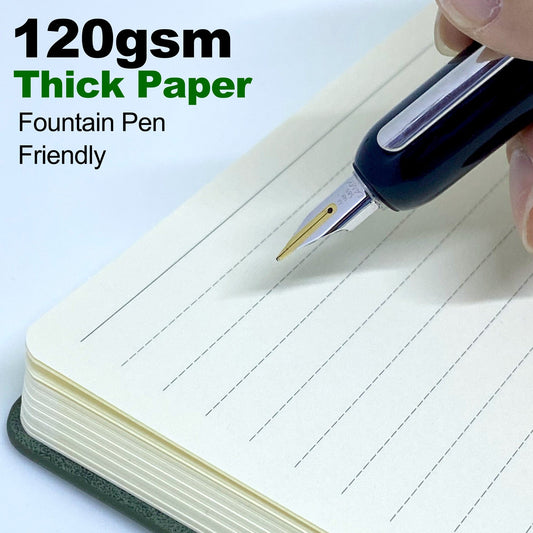
I tested it with a few different pens. A fine nib fountain pen wrote smoothly with no drag. A gel pen dried quickly without smudging. A pencil left a clear line that erased cleanly. That range matters because your writing tools change depending on your mood or what you have on hand. A journal that works with everything is a journal you will actually fill.
Who should buy this journal
This journal is not for everyone. If you want a strict planner with hourly slots and pre-printed dates, look elsewhere. If you want a completely blank sketchbook with no guidance, there are simpler options. But if you want a journal that sits between those two extremes, one that gives you a gentle structure without boxing you in, then this is a strong choice.
I have recommended it to friends who are freelancers trying to keep their projects straight. I have given it to a friend who wanted to start a daily writing habit and needed something that would not intimidate her. And I keep one on my own desk for the simple reason that it makes me want to write.
The LeStallion writing journal notebook is not a magic solution. It will not make you productive by itself. But it removes the friction that stops most people from sticking with a journal. And that is a real, practical benefit.
Final thoughts on choosing the right notebook
There are a lot of notebooks out there. Some are cheap and fall apart. Some are expensive and feel precious, so you never want to ruin them with your messy handwriting. The LeStallion writing journal notebook lands in a place that feels right for daily use. It is built to last but not so fancy that you hesitate to write in it. That balance is hard to find.
If you have been looking for a journal that actually supports your productivity instead of just sitting on your desk looking good, this one is worth trying. The structure helps you build a habit. The quality keeps you coming back. And the design stays out of your way so you can focus on what matters: the writing itself.